
your complete guide to saltwater pools
Saltwater pools have completely changed the game for backyard swimming, giving you a more luxurious feel and way less hassle than traditional chlorine pools. Here at EvoPools, we’ve watched countless homeowners make the switch to salt chlorination systems and never look back. The difference in water quality and maintenance time is, honestly, pretty incredible.
what exactly are saltwater pools and how do they work?
Here’s the cool part: saltwater pool systems use salt chlorine generators (you might hear them called salt chlorinators) to automatically make chlorine from dissolved salt through electrolysis. It’s a smart, continuous cycle where salt turns into chlorine, cleans your pool water and then converts back to salt again.
how the salt chlorination process works
Your pool’s salt chlorinator has two main parts working together:
salt cell (electrolytic converter): This gets installed on your pool’s return line after the pump, filter, and heater. It uses a safe electrical charge to turn dissolved salt into fresh chlorine.
control box: This little brain regulates when and how long the salt cell produces chlorine, basically putting your whole sanitization process on autopilot.
As your pool water flows through the salt cell, the electrical charge transforms that dissolved salt into chlorine. The chlorinated water spreads throughout your pool via the return jets, killing bacteria and stopping algae before it starts. Once the chlorine does its job, it converts back to salt. Rinse and repeat…forever.
saltwater pool benefits: why you should make the switch
water quality that feels amazing
Saltwater pools give you silky-soft water that’s way gentler on your skin and eyes. The salt concentration is about the same as human tears (roughly 3,000 PPM), so you don’t get that harsh chemical feeling you’re used to with traditional chlorine pools.
way less maintenance
Once you get your pool properly balanced, salt chlorinators seriously cut down on hands-on pool maintenance. Translation? You’ll spend less time fussing with chemicals and more time actually swimming.
saves you money over time
Sure, the upfront cost of a salt chlorination system is a bit higher, but your ongoing costs drop significantly. You’re not constantly buying liquid chlorine or chlorine tablets anymore.
better for your health and comfort
Here’s what you’ll notice right away:
- No more red, irritated eyes
- Your swimwear and towels won’t get bleached out
- Less skin irritation
- No more strong chlorine smell
why fiberglass pools are perfect for saltwater systems
Not all pool types handle salt chlorination the same way. Let’s break down how different pool materials stack up:
concrete pools and saltwater don’t mix well
Salt chlorinators can be up to five times more corrosive to concrete surfaces than traditional chlorine. That extra abrasiveness means you’ll need to resurface more often, which gets expensive fast when you’re running a salt system.
vinyl liner pools have corrosion problems
While plenty of vinyl liner pool owners use salt chlorination, those metal wall components are vulnerable to rust and corrosion. That can create some serious structural issues down the road.
fiberglass pools: the ideal match
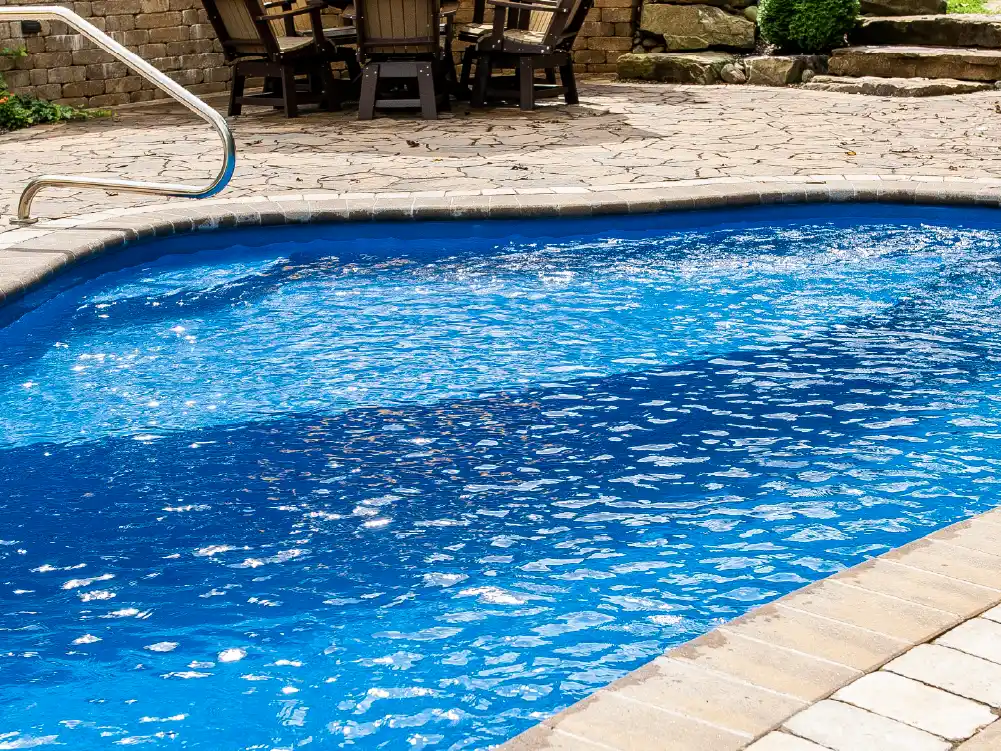
Fiberglass pools are hands-down the best option for saltwater systems. Thanks to decades of experience in the marine industry, fiberglass composite materials are specifically designed for saltwater environments. That non-porous surface resists salt corrosion while giving you:
- Complete protection against salt damage
- Smooth surfaces that naturally resist algae growth
- Minimal chemical absorption• Long-lasting durability in saltwater conditions
EvoPools and other premium fiberglass pool designs show just how perfectly salt chlorination systems work with modern composite pool construction.
saltwater pool chemistry: keeping everything balanced
getting your salt levels right
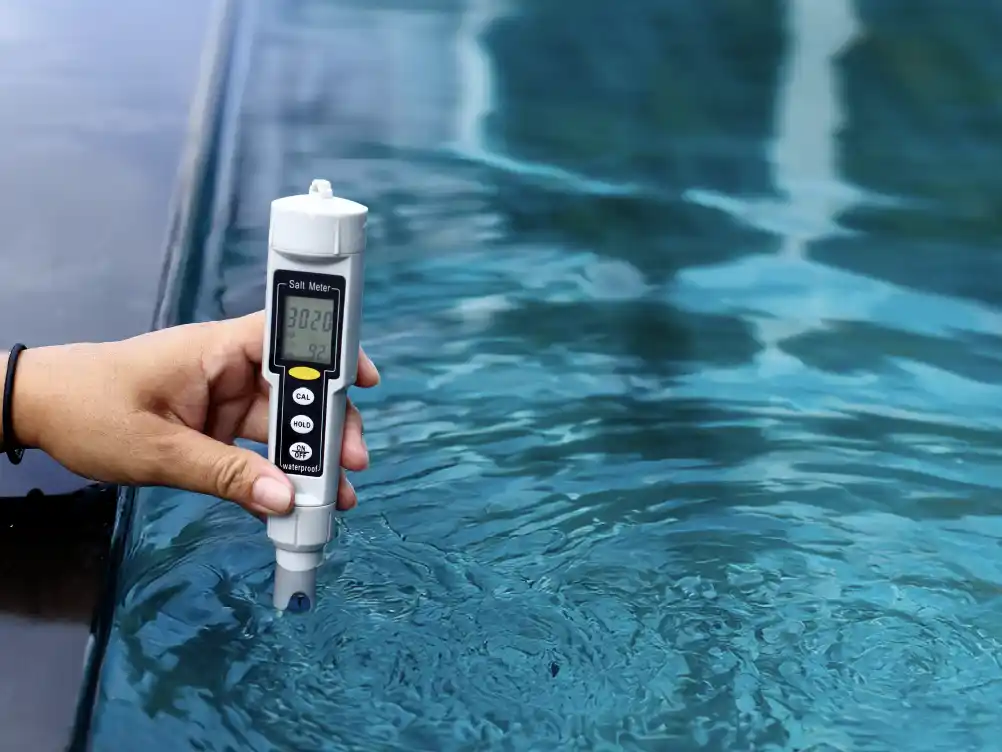
You want to keep your salt concentration between 2,700 and 3,400 PPM (parts per million). That’s about one teaspoon of salt per gallon of pool water. Use test strips for accurate readings, as electronic salt chlorinators don’t always give you precise measurements.
understanding the different types of chlorine
free chlorine: This is your active sanitizer that kills bacteria and oxidizes contaminants. Keep it between 1-3 PPM.
combined chlorine: This forms when free chlorine reacts with pool contaminants, and it’s what causes eye irritation and that chlorine smell. Regular shock treatments get rid of combined chlorine.
managing your pH levels
Keep your pH levels between 7.2-7.4 for the best comfort and chlorine effectiveness. Human eyes have a pH of 7.2-7.4, so keeping your pool pH in that range minimizes eye irritation. Also, make sure your cyanuric acid levels stay below 30 PPM to keep your chlorine working effectively and your water balanced.
busting common saltwater pool myths
myth: you have to drain your pool to convert
reality: Just test your current water chemistry and add the right amount of salt. No draining necessary.
myth: saltwater pools taste like the ocean
reality: A properly maintained salt pool has just 1/10th the salt concentration of ocean water. You’ll barely taste it, if at all.
myth: salt evaporates, so you’re always adding more
reality: Salt doesn’t evaporate. You only need to add salt when you lose water through backwashing, splashing, or overflow.
myth: you don’t need to balance the water
reality: You still need to regularly monitor and adjust pH, total alkalinity and calcium hardness.
salt cell maintenance and care
While salt chlorinators need way less maintenance than traditional systems, you still need to do some basic upkeep:
check it monthly
Inspect your salt cell monthly for scale buildup on the plates. When scale forms, it reduces efficiency and shortens your cell’s lifespan.
prevent scale formation
Keep your water chemistry in check to prevent calcium scale from forming. If scale does show up, clean it according to the manufacturer’s instructions.
choosing the right salt
Use only pure sodium chloride (99%+ purity). Good options include:
- Food-grade salt
- Water softener salt pellets
- Coarse solar salt
Skip the rock salt, iodized salt or anything with anti-caking additives.
choosing the right salt chlorination system for your pool
When you’re picking out a salt chlorinator, think about:
- Your pool size and how many people use it
- Your climate and usage patterns
- What automation features you want
- Your budget and long-term costs
Top manufacturers like Hayward Pool Products make comprehensive salt chlorination systems designed to work seamlessly with fiberglass pool plumbing.
installation tips
Salt chlorinators must be installed on the return line behind your pump, filter and heater. Professional installation makes sure everything performs optimally and keeps your warranty valid.
is a saltwater pool right for you?
Saltwater pools are a great fit if you’re looking for:
- Less time spent on maintenance
- Water that feels better on your skin
- Long-term cost savings
- An overall better swimming experience
When you combine that with the durability and low maintenance of fiberglass pool construction, salt chlorination creates the ultimate backyard swimming setup.
ready to get started with your saltwater pool?
Want to experience the luxury of saltwater swimming for yourself? EvoPools’ fiberglass pools are the perfect foundation for salt chlorination systems. Your EvoPools dealer can help you choose the ideal pool design and salt chlorination system for your backyard.
frequently asked questions about saltwater pools
How much salt do I need to add to my pool? The amount depends on your pool size, but you’re aiming for 2,700 to 3,400 PPM. Your salt chlorinator’s manual will have a chart, or your dealer can calculate the exact amount.
Will my pool water taste salty? Not really. With only 1/10th the salt of ocean water, most people can’t taste it at all.
Do I still need to buy chlorine for my saltwater pool? Nope! Your salt chlorinator makes chlorine automatically. You might need shock treatment occasionally, but no regular chlorine purchases.
Can I convert my existing pool to saltwater? Absolutely! Just test your water, add the appropriate amount of salt, and install a salt chlorination system. No need to drain your pool.
How long do salt cells last? Most salt cells last 3-7 years depending on usage and maintenance. Proper water chemistry extends their lifespan.
Are saltwater pools safe for people with sensitive skin? Yes! The softer water and lower chemical concentration make saltwater pools gentler on sensitive skin than traditional chlorine pools.
Do saltwater pools require less maintenance? They definitely require less day-to-day maintenance since the chlorine production is automated. You’ll still need to monitor water chemistry and clean the salt cell periodically.
Can I use any type of salt in my pool? You need pure sodium chloride (99%+ purity). Food-grade salt, water softener salt pellets, or coarse solar salt all work great. Avoid rock salt or iodized salt.
Will saltwater damage my pool equipment? Salt can be corrosive to certain materials. That’s why fiberglass pools are ideal—they’re engineered to resist salt corrosion. Make sure all your equipment is rated for saltwater use.
What’s the difference between saltwater and regular chlorine pools? Saltwater pools use a salt chlorinator to automatically generate chlorine from salt, while traditional pools require you to manually add chlorine. The end result is softer water, less maintenance, and no harsh chemical smell.


