
home pool accessibility: creating inclusive backyard swimming spaces for every family member
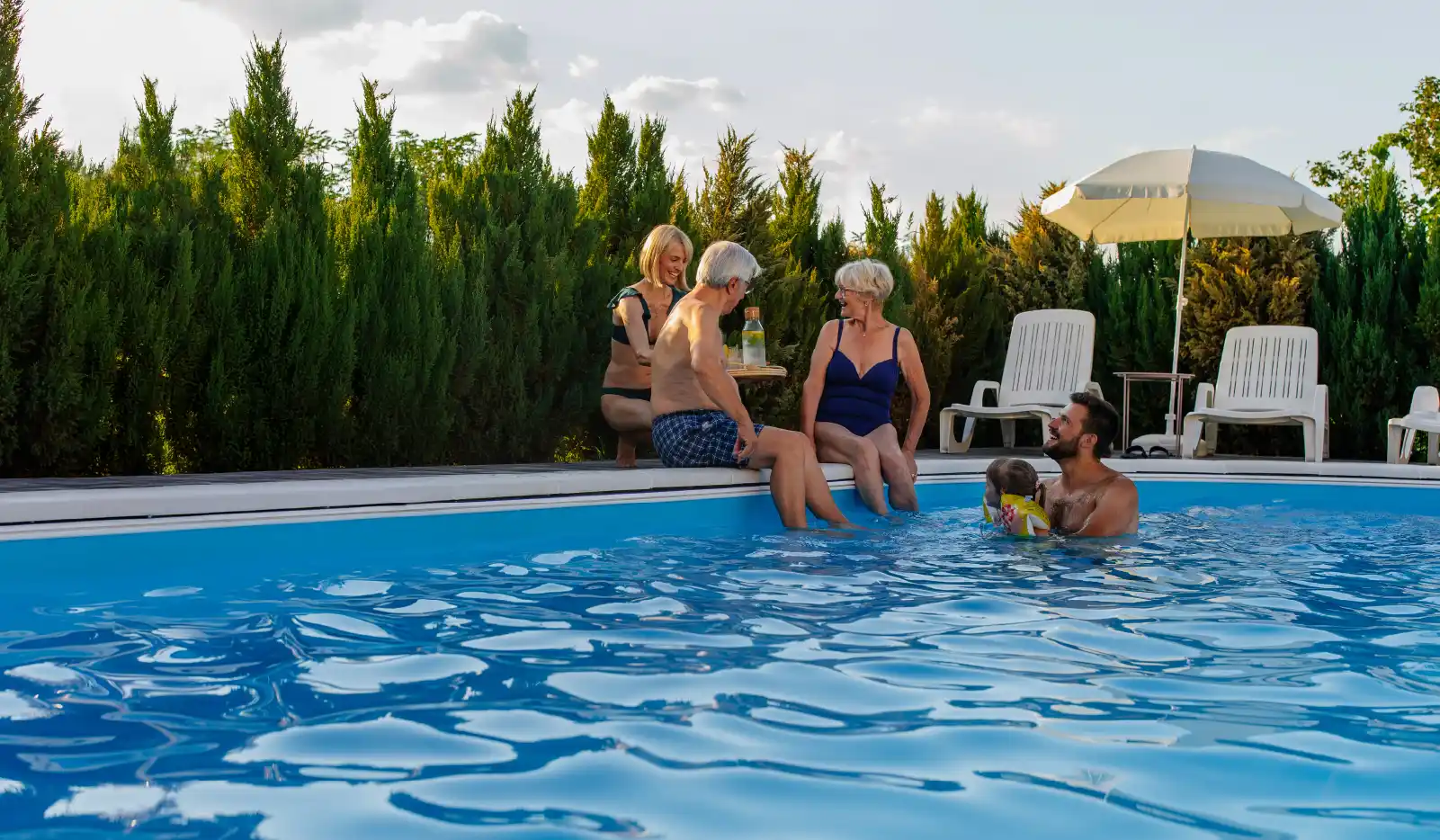
Your backyard pool should be a place where every family member can safely enjoy the water, regardless of age or ability. As families span multiple generations and recognize diverse needs, accessible home pool design has become essential for creating welcoming outdoor spaces that serve everyone for years to come. At EvoPools, we understand that truly exceptional pool design means creating beautiful spaces that work for your entire family.
why accessible pool design matters for homeowners
Home pool accessibility isn’t just about meeting legal requirements; it’s also about future-proofing your investment and ensuring your pool remains usable as family needs change. Whether you’re planning for aging parents, accommodating a family member with mobility challenges or creating the safest environment for children and elderly relatives, accessible pool design benefits everyone.
An accessible pool increases your home’s value by appealing to a broader range of buyers. As the population ages, homes with accessible features become increasingly attractive in the real estate market. Additionally, accessible pool features often enhance safety for all users, reducing accident risks.
Many homeowners discover that accessible features they initially installed for one family member end up benefiting everyone. Gentle entry slopes appeal to nervous swimmers, handrails provide extra security for all ages and well-designed lighting improves visibility for evening swimming.
understanding accessibility basics for residential pools
While private pools aren’t subject to the same ADA requirements as public facilities, understanding these guidelines provides valuable insight into best practices. The principles behind ADA compliance—independence, safety and dignity—should guide residential pool accessibility decisions.
For homeowners, the focus shifts from regulatory compliance to practical accessibility that enhances daily use. This means considering how different family members will enter and exit the pool, move around the pool area and use amenities safely and comfortably.
Smart homeowners often exceed basic accessibility standards, recognizing that thoughtful design decisions made during construction are much more cost-effective than retrofitting features later.
essential accessibility features for home pools
pool entry options that work for everyone
The pool entry system represents the most critical accessibility decision for homeowners. Traditional steps work well for many users but can present challenges for family members with mobility limitations, balance issues or joint problems.
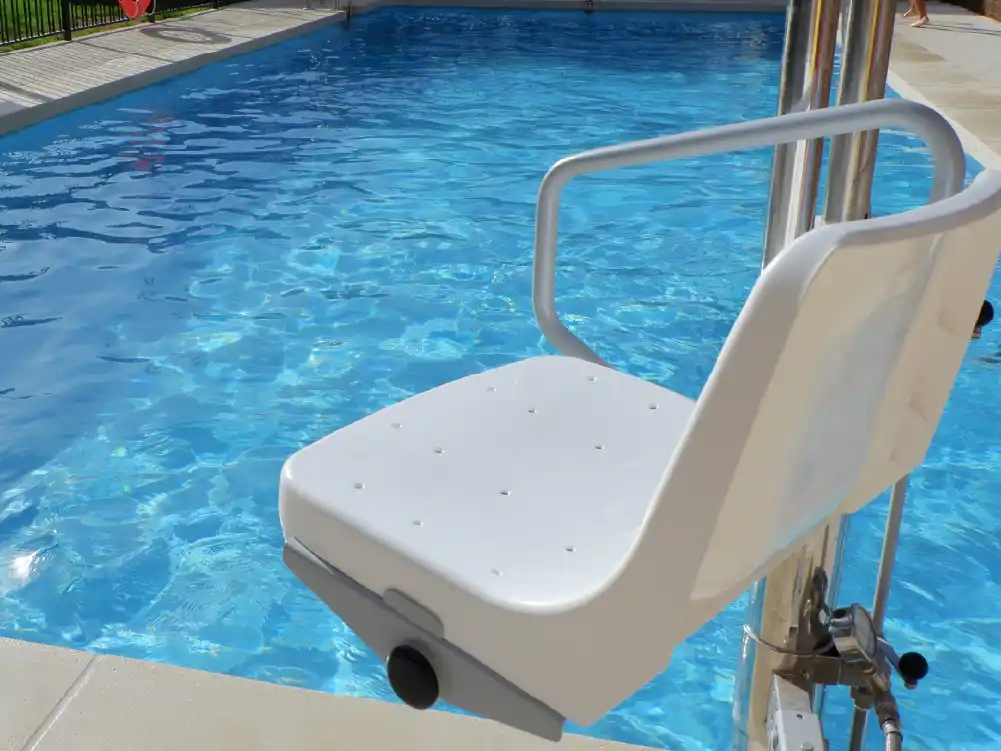
Pool lifts designed for residential use offer an excellent solution for homes where family members use wheelchairs or have difficulty with traditional steps. Modern residential pool lifts are more compact and aesthetically pleasing than commercial models while providing the same level of safety.
Tanning ledges and splash pads create accessible shallow water areas that accommodate wheelchairs, walkers and anyone who finds traditional deep water challenging. These features prove particularly popular with families that include young children, as parents can easily supervise from shallow areas while kids play safely.
handrails and grab bars for enhanced safety
Strategically placed handrails and grab bars provide crucial support for pool users of all ages. These features should extend along pool steps, around seating areas and at key transition points throughout the pool area.
Handrails should feature slip-resistant grips and be positioned at appropriate heights for different users. Consider installing rails at multiple heights to accommodate both children and adults or choose adjustable systems that can be modified as needs change.
Grab bars near pool entry points, changing areas and seating provide additional security and confidence. Choose corrosion-resistant materials designed specifically for pool environments to ensure longevity.
slip-resistant surfaces and safe pathways
Pool decking and walkways should feature slip-resistant surfaces that remain safe when wet. This consideration becomes even more important in accessible pool areas where users may be moving more slowly or using mobility aids.
Textured concrete, slip-resistant pavers and specialized pool deck coatings provide excellent traction while maintaining an attractive appearance. Avoid overly smooth surfaces that become slippery when wet but also avoid textures so rough they could injure bare feet.
Pathway design should eliminate tripping hazards and provide clear, wide routes between key areas. Consider the turning radius needed for wheelchairs and mobility devices when planning layouts.
design considerations for multi-generational families
accommodating different physical abilities
Multi-generational pool use requires careful consideration of varying physical capabilities. Water depth options should include shallow areas where less confident swimmers feel secure, as well as deeper sections for stronger swimmers.
Pool lighting plays a crucial role in accessibility, particularly for family members with vision challenges. LED pool lights provide bright, even illumination that enhances safety during evening use. Consider adding pathway lighting that guides users safely from the house to the pool area.
Temperature control becomes important when accommodating users with different health needs. Some medical conditions affect temperature regulation, making consistent water temperature crucial for comfortable swimming. Efficient heating systems allow you to maintain optimal temperatures while managing energy costs.
creating comfortable gathering spaces
Accessible pool areas should include comfortable seating and gathering spaces where family members can relax and socialize. These areas should be positioned to allow easy supervision of swimmers while providing options for both sun and shade.
Built-in seating around the pool perimeter offers convenient resting spots without requiring users to navigate separate furniture. These seats can incorporate backrests and armrests that provide additional support for elderly family members or those with mobility challenges.
Pool-adjacent patios should accommodate outdoor furniture arrangements that work for wheelchairs and mobility devices. This includes providing adequate space for maneuvering and ensuring tables are at appropriate heights for all users.
sensory considerations for home pools
Pool accessibility extends beyond physical accommodations to include sensory considerations. This includes managing noise levels that might be problematic for family members with hearing sensitivities and ensuring adequate lighting that doesn’t create problematic glare.
Visual contrast between pool edges and decking helps family members with vision challenges navigate safely. Light-colored coping against darker decking creates clear visual boundaries that improve safety for all users.
Water features and pool equipment should be positioned to minimize noise in seating and conversation areas. While moving water sounds pleasant, loud pumps or waterfalls might interfere with communication or overwhelm some family members.
technology solutions for accessible home pools
automated pool systems and smart controls
Modern pool automation systems significantly improve accessibility by reducing the physical demands of pool maintenance and operation. Automated chemical dosing, circulation control and cleaning systems keep pools ready for use with minimal manual intervention.
Smart pool controls accessible via smartphone apps allow users to adjust settings, monitor conditions, and control features remotely. EvoPools creates beautiful accessible backyard pools that let every family member—from grandparents to grandchildren—safely enjoy the water together.
Voice-activated pool controls represent the cutting edge of accessible technology. These systems allow users to control lighting, temperature, jets and other features using simple voice commands, eliminating the need to reach physical controls that might be difficult for some users to operate.
safety and monitoring systems
Advanced pool safety systems provide peace of mind for families with diverse swimming abilities. Pool alarms that detect unauthorized entry help protect children and confused elderly family members from accidental pool access.
Underwater cameras and monitoring systems allow caregivers to keep watch over swimmers, particularly useful when supervising family members who may need additional attention. These systems can send alerts to smartphones when motion is detected in the pool area.
Emergency communication systems become particularly important in accessible pools. Waterproof emergency call buttons positioned within reach of pool users can summon help when needed, providing additional security for independent swimming.
planning and budgeting for accessible home pools
cost considerations and value
Accessible pool features require upfront investment but provide long-term value through increased usability, safety and property appeal. Many accessibility features that seem specialized benefit all users, making them valuable additions regardless of immediate accessibility needs.
Pool lifts and other specialized equipment represent significant investments but often prove essential for family members who couldn’t otherwise use the pool safely. Consider these features as investments in family quality of life rather than simply additional expenses.
Universal design features that work for everyone often cost little more than standard alternatives when incorporated during initial construction. However, retrofitting accessibility features after construction typically costs significantly more, making upfront planning crucial.
working with experienced pool builders
Creating truly accessible home pools requires working with contractors who understand both accessibility needs and aesthetic integration. The goal is to create pools that serve diverse needs while maintaining the beauty and functionality that make backyard pools so appealing.
Professional designers can help balance accessibility requirements with other design goals, ensuring that safety features enhance rather than detract from your pool’s overall appearance. They can also advise on which features provide the best return on investment for your specific family situation.
Experienced pool builders understand local building codes and can ensure that your accessible pool meets all applicable requirements while maximizing functionality for your family’s specific needs.
maintenance and long-term considerations
keeping accessibility pool features functional
Accessible pool features require regular maintenance to ensure continued reliability and safety. Pool lifts need periodic inspection and servicing; handrails should be checked for stability and slip-resistant surfaces may need periodic renewal.
Establish maintenance schedules for all accessibility equipment and keep backup power sources for essential features like pool lifts that might be needed during power outages. Regular professional inspections help identify potential issues before they become problems.
Consider the long-term availability of parts and service for specialized accessibility equipment when making initial purchases. Choose established manufacturers with strong service networks to ensure ongoing support.
adapting to changing family needs
Family accessibility needs often change over time, making flexible design important for long-term functionality. Features that seem unnecessary today might become essential as family members age or if health situations change.
Plan pool areas with future modifications in mind. This might mean running electrical service to areas where lifts might eventually be installed or designing decking that can accommodate ramps or other accessibility features later.
Regular assessment of family needs helps identify when pool modifications might be beneficial. Small changes made proactively are often less expensive and disruptive than major modifications made in response to urgent needs.
popular accessible pool features for homes
tanning ledges and splash pad features
Tanning ledges have become increasingly popular among homeowners seeking accessible design that doesn’t compromise aesthetics. These shallow water areas, typically 6-12 inches deep, provide safe spaces where users can enjoy the water while maintaining stability and easy exit access.
Splash pad features work particularly well for families with young children, elderly members or anyone who finds deeper water challenging. These areas allow users to experience water recreation at their comfort level while providing easy supervision opportunities.
These features also create opportunities for creative design elements like water jets, fountains and seating that enhance the pool’s visual appeal while serving practical accessibility functions.
integrated seating and rest areas
Built-in seating areas, such as bench seating, within the pool provide convenient rest spots for users who may tire easily or need frequent breaks from swimming. These seats can be positioned at various depths to accommodate different user preferences and abilities.
Swim-up bars and shallow lounging areas create social spaces where family members can gather while remaining in the water. These features prove popular with users who enjoy water activities but may not be strong swimmers.
Integrated seating should include options with backrests and armrests that provide additional support and make entering and exiting easier for users with mobility challenges.
therapeutic and exercise features
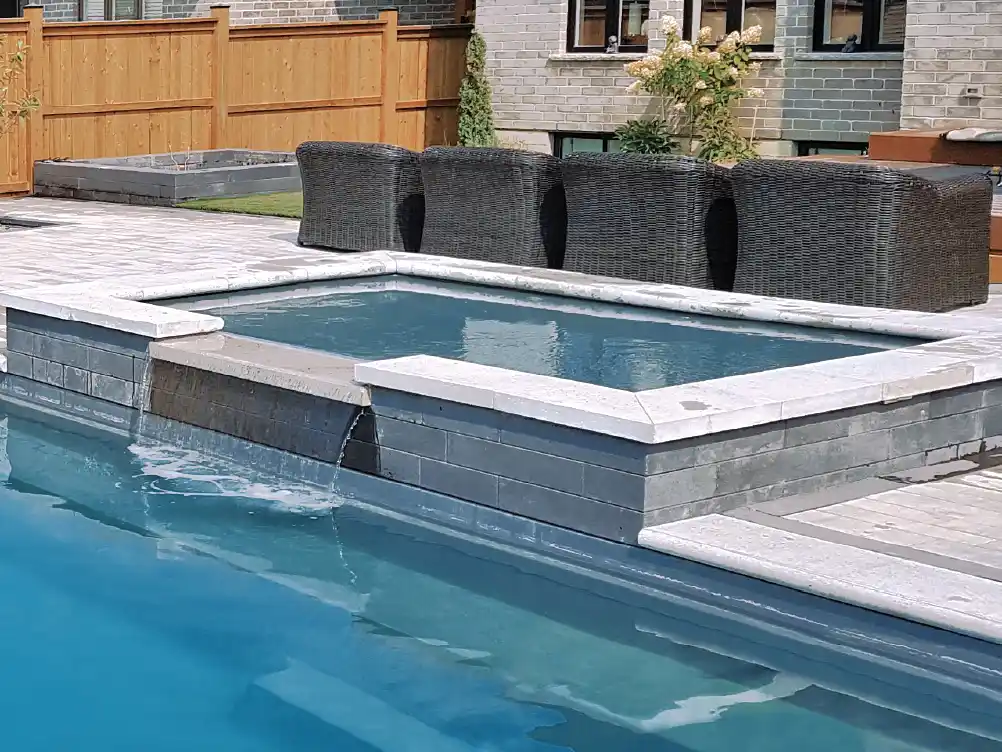
Many accessible home pools incorporate therapeutic features that provide health benefits for family members with specific needs. Warm-water spas attached to the main pool create comfortable spaces for gentle exercise and relaxation.
Resistance jets and swim-current systems allow for stationary swimming and exercise, which can be particularly beneficial for users with mobility limitations who want to maintain fitness and strength.
Pool steps designed with exercise in mind, featuring appropriate spacing and handrails, can provide valuable physical therapy opportunities for family members recovering from injuries or managing chronic conditions.
maximizing your accessible pool investment
insurance and liability considerations
Accessible pool features often reduce liability risks by improving overall safety, but homeowners should discuss their specific situation with insurance providers. Some safety features may qualify for insurance discounts, while others might require coverage adjustments.
Proper installation and maintenance of accessibility equipment help ensure coverage in case of accidents. Keep documentation of professional installations and regular maintenance to support insurance claims if needed.
Consider additional liability coverage if your accessible pool will be used by visitors or caregivers who might not be familiar with the specific features and safety protocols.
enjoying your investment year-round
Accessible pools can provide year-round benefits when properly designed and equipped. Heating systems allow for comfortable use during cooler months, while pool covers protect the investment and reduce maintenance needs.
Indoor pool enclosures or retractable covers extend the swimming season while providing protection from weather and environmental factors that might affect users with certain health conditions.
Year-round usability maximizes the return on your accessibility investment by providing more opportunities for family enjoyment and therapeutic benefits.
making your backyard pool dreams accessible
Creating an accessible home pool means building a space where every family member can safely enjoy the water, regardless of age, ability or mobility challenges. The investment in accessible design pays dividends through increased safety, expanded usability and the peace of mind that comes from knowing your pool welcomes everyone.
Modern accessible pool design seamlessly integrates safety features with aesthetic appeal, creating beautiful backyard retreats that happen to be accessible rather than accessibility features that compromise design. The key lies in planning for diverse needs from the beginning and working with experienced professionals who understand both accessibility requirements and exceptional pool design.
Your backyard pool represents a significant investment in your family’s quality of life. By incorporating accessible design principles, you ensure that this investment continues to serve your family’s changing needs for years to come while creating a space where memories are made and shared across generations.
Don’t let accessibility concerns limit your pool dreams. Reach out to your local EvoPools dealer today to learn how accessible design features can enhance safety, increase your home’s value, and create lasting memories for every family member.


