
fiberglass pools in florida: what sunshine state homeowners need to know before they build
Florida doesn’t really have an off-season. Miami’s year-round warmth and coastal energy. Tampa’s Gulf-side lifestyle where the pool is part of the daily routine regardless of the month. Orlando’s blend of theme park access and real neighborhood life where a backyard pool transforms what home actually means.
Jacksonville’s river city character and the northern Florida warmth that makes outdoor living feel like a birthright. Quality fiberglass pools like those made by EvoPools are built specifically for Florida living, engineered with vinyl ester resin throughout to handle what the Sunshine State delivers year-round, from intense coastal salt air and hurricane season to the kind of heat and humidity that never fully relents.
Pools in Florida aren’t a seasonal amenity. They’re how Florida families live. When temperatures stay warm twelve months a year and the question isn’t whether to swim but simply when, the pool choice you make shapes how your property feels for decades.
If you’re planning a first pool or replacing a concrete installation that Florida’s environment has been harder on than expected, this guide covers what you need to know about fiberglass pools built to thrive in the Sunshine State.
what makes florida uniquely demanding for pools?
Florida’s environment creates challenges for pool materials that four-season states simply don’t face in the same way.
Salt air along both coasts works on materials every single day, not just during storm season. High humidity year-round creates continuous moisture exposure for every surface around the pool. Hurricane season from June through November brings structural tests that not every pool construction method handles equally well. UV exposure that never lets up because summer in Florida effectively runs twelve months. And a year-round warm water temperature that keeps algae conditions favorable in any porous surface throughout every single month.
EvoPools construction uses vinyl ester resin throughout the entire shell, creating a composite structure built to handle all of these Florida-specific demands reliably.
how does fiberglass perform in florida’s coastal salt air?
Salt air is one of the most consistent and damaging forces a pool faces in Florida, and this question matters particularly for the millions of Florida homeowners within reach of coastal breezes.
Concrete pools are porous by fundamental design. Salt air penetrates and causes deterioration that compounds progressively over time. Florida’s coastal concrete pools often reach their resurfacing threshold sooner than inland pools because the combination of salt air, high humidity and year-round UV exposure breaks down plaster faster than cooler or drier climates.
EvoPools’ vinyl ester resin construction throughout the shell creates a non-reactive composite that resists salt air corrosion at the structural level. This isn’t a surface coating that can wear away, as it’s woven through every structural layer, providing protection that remains consistent through decades of coastal Florida exposure. The sealed, non-porous surface doesn’t absorb salt-laden moisture the way concrete does.
For homeowners near Miami, Tampa Bay, the Gulf Coast, the Atlantic side or the Florida Keys, this engineering advantage becomes more meaningful with every passing year.
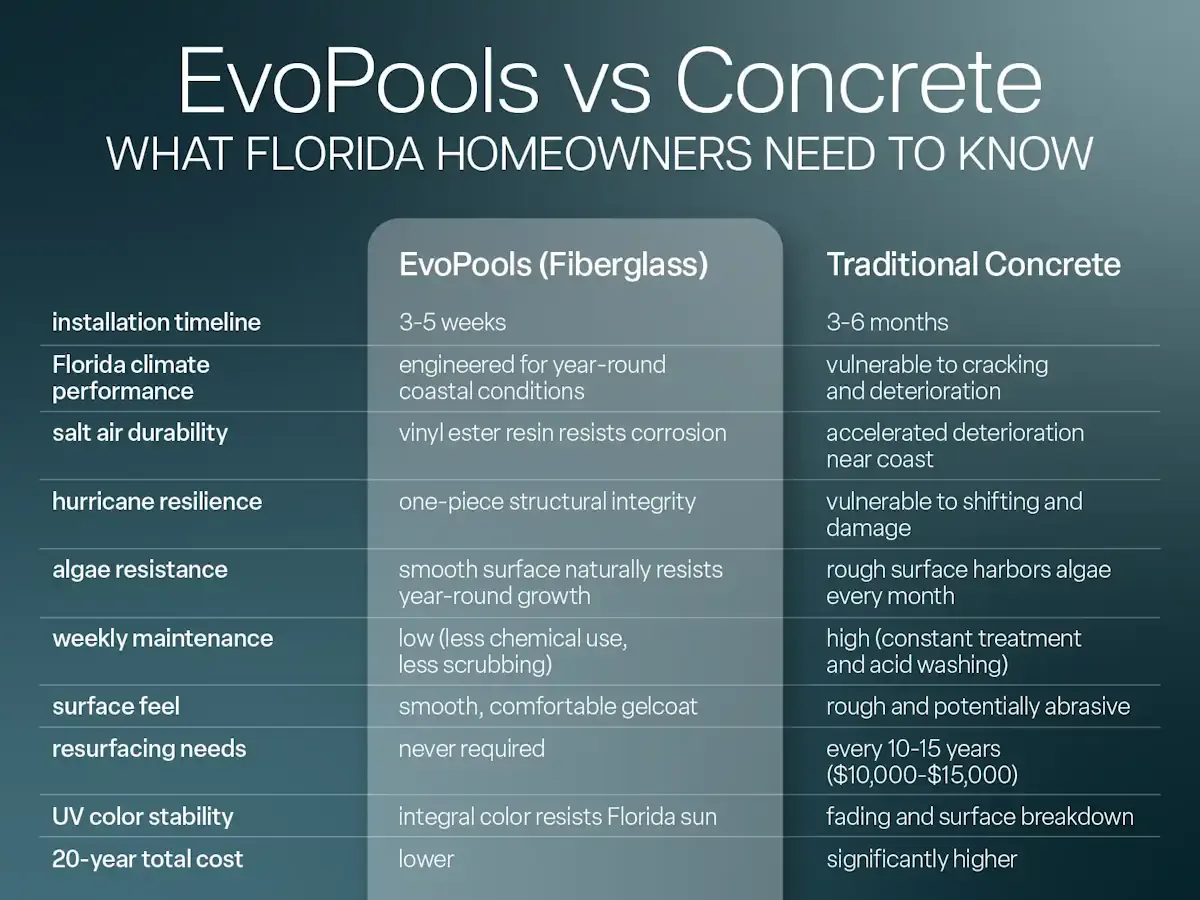
The bottom line: In Florida’s year-round coastal climate with salt air, intense UV and hurricane season, fiberglass pools deliver better performance, lower lifetime costs and easier maintenance than concrete.
how does florida’s heat and humidity affect pool performance year-round?
Florida doesn’t give pool materials a break between seasons the way northern states do. That continuous exposure is what separates fiberglass performance from concrete performance most clearly over years of ownership.
EvoPools’ smooth, non-porous gelcoat surface resists algae growth naturally every month of the year. Concrete pools with their rough, porous surfaces create ongoing algae management challenges that require chemical intervention and manual scrubbing twelve months a year in Florida. The difference in chemical costs and maintenance time compounds significantly over extended Florida ownership compared to what northern pool owners experience with a brief summer season.
Florida’s year-round humidity also works on porous concrete at the structural level continuously. Moisture infiltration accelerates deterioration in ways that compound without becoming visible until the damage is already significant. The sealed composite structure of EvoPools doesn’t absorb moisture the same way, maintaining integrity through Florida’s persistent humidity.
how long is the swimming season in florida?
The honest answer: it depends on where in Florida you live and how warm you like your water, but it’s longer than almost any other state.
South Florida and the Keys enjoy genuine year-round swimming with no meaningful off-season. Central Florida around Tampa and Orlando averages nine to ten months of comfortable pool weather, with many homeowners swimming through mild winter months. North Florida from Jacksonville through the Panhandle offers eight to nine months reliably, with cooler stretches from December through February that heating extends easily.
That extended use means more hours in the pool, more chemical cycles and more demands on pool materials than any northern state experiences. Fiberglass construction handles sustained year-round use better than concrete, maintaining surface quality through seasons that accelerate concrete deterioration.
what does fiberglass pool installation look like in florida?
Florida’s year-round climate means pool installation is possible throughout the year. Fall and winter work well for planning and permitting, positioning you for spring installation and full enjoyment of the prime pool season.
The installation process in Florida:
- Week 1: Site preparation and excavation with Florida soil and water table management
- Week 2: Pool placement, plumbing rough-in and electrical work
- Week 3: Backfill, equipment installation and deck preparation
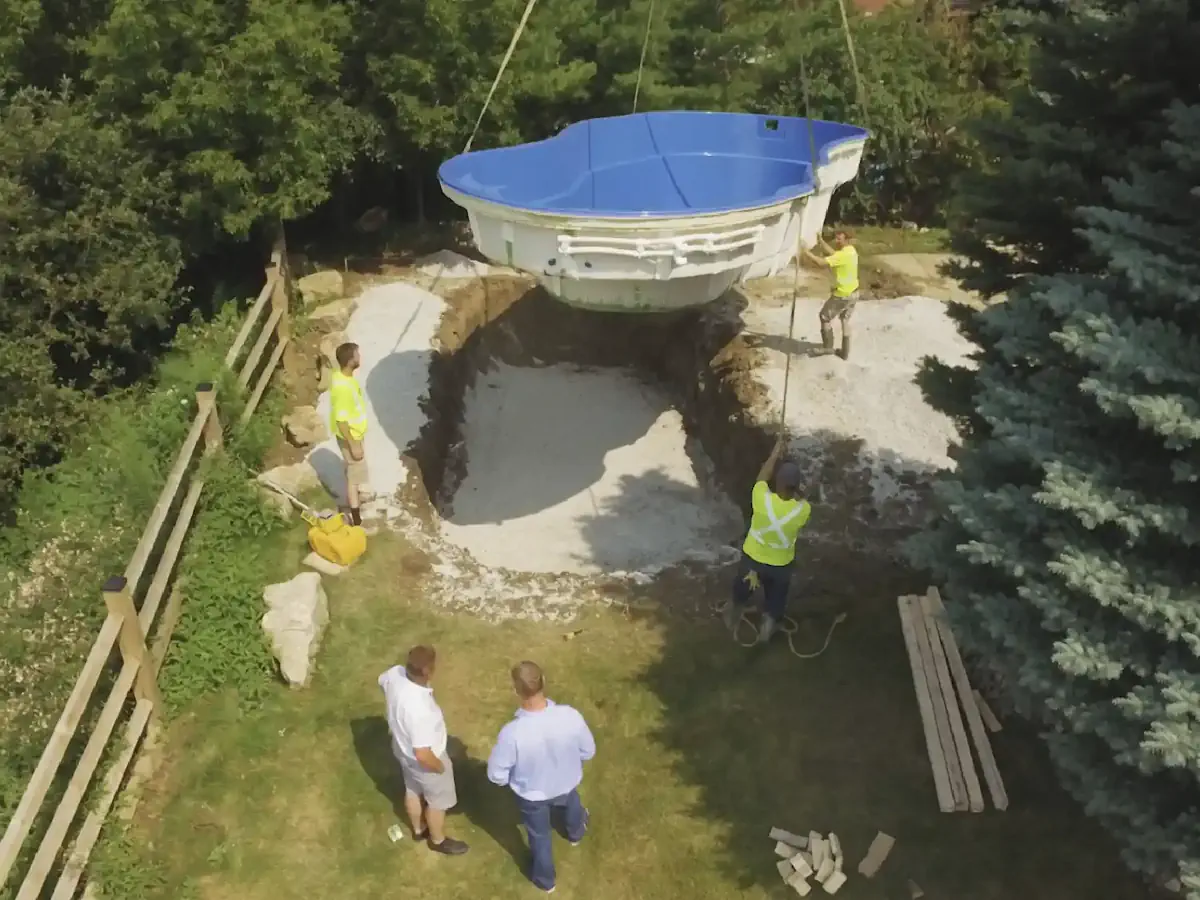
- Weeks 4–5: Deck finishing, final connections, water fill and system startup
Concrete installation in Florida requires sequential outdoor phases: steel framework, gunite application, extended curing complicated by Florida’s heat and humidity, plastering and additional curing. That process routinely extends three to six months. Florida’s summer heat can complicate concrete curing and push timelines further.
Choose fiberglass and you’re swimming this season. Choose concrete and construction consumes months you can’t get back.
how do fiberglass pools hold up during hurricane season?
This question deserves a direct answer because hurricane preparedness is a genuine part of Florida pool ownership.
The one-piece shell design eliminates seams that could separate under ground pressure during storm events. When hurricane rains saturate the ground quickly and water tables rise, concrete pools resist that ground movement rigidly and can develop new cracks or worsen existing ones. Fiberglass pools adapt intelligently to ground movement rather than fighting it. The sealed construction prevents water infiltration that damages concrete pool interiors during flooding events.
Proper installation by an experienced Florida builder, including appropriate drainage engineering and full compliance with local hurricane building codes, ensures your pool handles storm season year after year without structural compromise.
finding the right pool design for florida properties
pools for florida neighborhoods and coastal lots
Florida properties range from compact urban lots in Miami’s neighborhoods to Gulf-front estates with generous outdoor space, and fiberglass design adapts well across all of them. In standard suburban backyards throughout central Florida, Sarasota, Fort Lauderdale and communities across the state, thoughtful design delivers an outstanding pool experience.
Built-in tanning ledges create multi-purpose shallow areas for relaxation and supervised children’s play. Integrated seating makes the pool a natural gathering spot.
Entry systems that work comfortably for all ages make the pool genuinely usable for the whole family year-round.
larger installations for florida properties with space
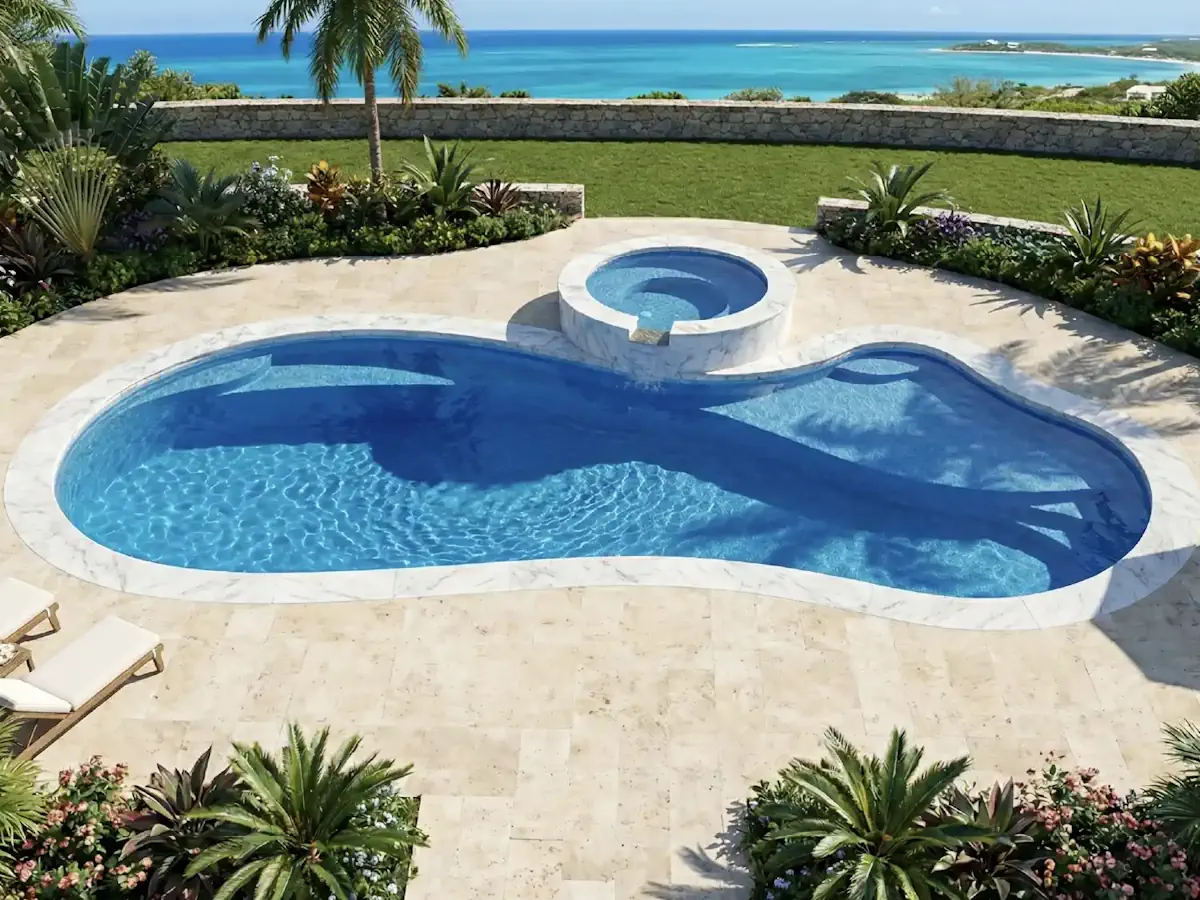
If your property offers more generous outdoor space, such as a waterfront setting, generous suburban lot or coastal acreage, the full range of fiberglass designs opens up. Rectangular pools provide clean lines and dedicated lap lanes for fitness-focused homeowners. Freeform designs bring resort atmosphere with flowing transitions between swimming and relaxation zones.
A spa makes particular sense in Florida, extending comfortable outdoor use into cooler winter evenings in north and central Florida and adding a dimension to the pool experience that most Florida homeowners end up using far more than expected.
what does pool maintenance look like in florida?
Florida’s year-round season means maintenance runs continuously, which makes the surface quality difference between fiberglass and concrete particularly significant here.
A realistic Florida fiberglass pool maintenance routine:
Weekly throughout the year:
- Surface skimming (afternoon storms bring debris regularly during summer months)
- Skimmer and pump basket cleaning
- Water chemistry testing and adjustment
- Scheduled automatic cleaner operation
Monthly:
- Filter system backwashing
- Equipment performance check
- Water level monitoring (Florida’s evaporation rates are higher than most states)
florida-specific pool maintenance considerations
Spring pollen can be heavy across parts of Florida, particularly inland. A quality cover helps during peak weeks. When debris reaches the water, smooth gelcoat cleans up considerably easier than concrete’s rough surface.
Florida’s summer afternoon storms from June through September bring debris almost daily in some areas. Regular skimming becomes part of Florida pool life. The smooth fiberglass surface makes that routine quick and manageable.
Hurricane preparedness is worth treating seriously. Know your pool’s drainage system, understand local protocols and have a storm readiness plan before June arrives each year.
Year-round warmth means water chemistry requires consistent attention every month. Fiberglass maintains chemical balance more consistently than concrete, reducing the adjustment work even through Florida’s demanding year-round conditions.
understanding your pool investment in florida
Every Florida project reflects its own property and design circumstances. Understanding investment factors helps you plan realistically.
Foundation pool investment factors:
- Pool size and design complexity: Larger installations and complex designs increase investment
- Integrated features: Tanning ledges, spas and custom elements add function and value
- Color selection: Premium gelcoat colors may carry modest additional investment
Florida-specific installation considerations:
- Coastal location: Proximity to saltwater affects material specifications and building codes
- Soil conditions: Sandy soils throughout much of Florida affect excavation approach
- Water table: High water tables in some areas require specific installation engineering
- Permits and inspections: Municipal requirements typically range from $200 to $1,000 or more
- Hurricane zone compliance: Coastal areas carry additional building code specifications
Additional project elements:
- Deck materials: Concrete, pavers or stone at different investment levels
- Safety barriers: Florida-required fencing with self-closing, self-latching gate systems
- Equipment selections: Heaters for winter use, automatic covers, lighting and automation
- Landscaping: Completing your outdoor environment
The 20-year perspective: Concrete resurfacing every 10 to 15 years costs $10,000 to $15,000 per occurrence. In Florida’s coastal climate, concrete may reach that threshold sooner than inland installations. Fiberglass never needs resurfacing, and lower chemical requirements create substantial additional savings over extended Florida ownership.
pool permits and regulations across florida
Florida requires building permits for all residential pool construction throughout the state.
Standard requirements include:
- Building permits from local building departments
- Electrical permits covering pumps, heating systems and lighting
- Barrier compliance (Florida requires fencing with self-closing, self-latching gates statewide)
- Setback compliance (required distances from property lines and structures)
- Hurricane zone building code compliance in coastal areas
- HOA approval in many Florida communities
Larger markets including Miami, Tampa, Orlando and Jacksonville have detailed requirements and longer review timelines. Coastal municipalities carry additional hurricane zone specifications. Your EvoPools dealer should manage the complete permitting process as standard service. Confirm this before signing contracts.
why florida homeowners choose evopools
Here’s what Florida pool owners consistently value most:
year-round performance that doesn’t quit: Florida pools work every month. Engineering designed for sustained year-round coastal performance matters in ways that seasonal pool owners never fully appreciate.
salt air resilience that compounds over time: The difference between fiberglass and concrete near Florida’s coast isn’t dramatic in year one. It becomes very clear by year eight or ten.
hurricane confidence: One-piece construction and proper installation provide genuine structural peace of mind when storm season arrives, which it reliably does every year.
less maintenance, more swimming: The smooth surface that resists algae naturally means less time on chemical management and more time in the water through every month Florida makes pool use possible.
protecting property value: In Florida’s competitive real estate market, a quality pool is expected rather than exceptional. The right pool enhances value. The wrong one becomes a disclosure conversation.
frequently asked questions about EvoPools in florida
ready to build your florida pool?
Florida’s year-round climate, coastal salt air and hurricane season deserve a pool engineered to handle all of it. EvoPools delivers vinyl ester resin construction throughout the entire shell and proven performance through demanding Sunshine State conditions.
Connect with a certified EvoPools dealer who understands Florida’s coastal conditions, regional climate and local building requirements.
Next steps:
Explore pool designs: Browse EvoPools’ complete collection or designs suited to Florida properties from compact coastal lots to Gulf-front estates and inland communities.
Understand your investment: Connect with a certified EvoPools dealer for accurate cost guidance based on your specific property, location and coastal considerations.
Start planning: Speak with a local Florida expert who understands your region’s soil, climate and permitting requirements.
Contact a local EvoPools dealer today to begin planning your Florida pool.


