
how much maintenance does a fiberglass pool really need?
If you’ve ever talked to a pool owner who spends every Saturday scrubbing walls and fighting algae, you might be wondering whether a backyard pool is worth the work. Here’s the good news. A fiberglass pool from EvoPools is about as low maintenance as pools get. It still needs some attention, but far less than you might expect.
Let’s walk through what fiberglass pool maintenance looks like, week to week and season to season, so you know exactly what you’re signing up for.
why are fiberglass pools easier to maintain?
It all comes down to the surface. A fiberglass pool has a smooth, nonporous gelcoat finish. Concrete and plaster are porous, which means they have tiny nooks where algae and bacteria love to settle in. Fiberglass doesn’t give them much to hold onto.
That smooth surface pays off in a few ways:
- Less algae. Algae have a harder time taking hold, so you spend less time brushing and treating.
- Fewer chemicals. Without a porous surface constantly nudging your water chemistry, many owners find their water stays balanced more easily.
- Easier cleaning. Debris and grime wipe away without heavy scrubbing.
- Gentle on skin and swimsuits. No rough plaster means no scraped toes or snagged suits.
what weekly maintenance does a fiberglass pool need?
Your weekly routine is short and simple. For most families it takes well under an hour.
- Skim the surface. Use a leaf net to scoop up leaves, bugs and floating debris before they sink.
- Empty the baskets. Clear out the skimmer basket and pump basket so water keeps flowing freely.
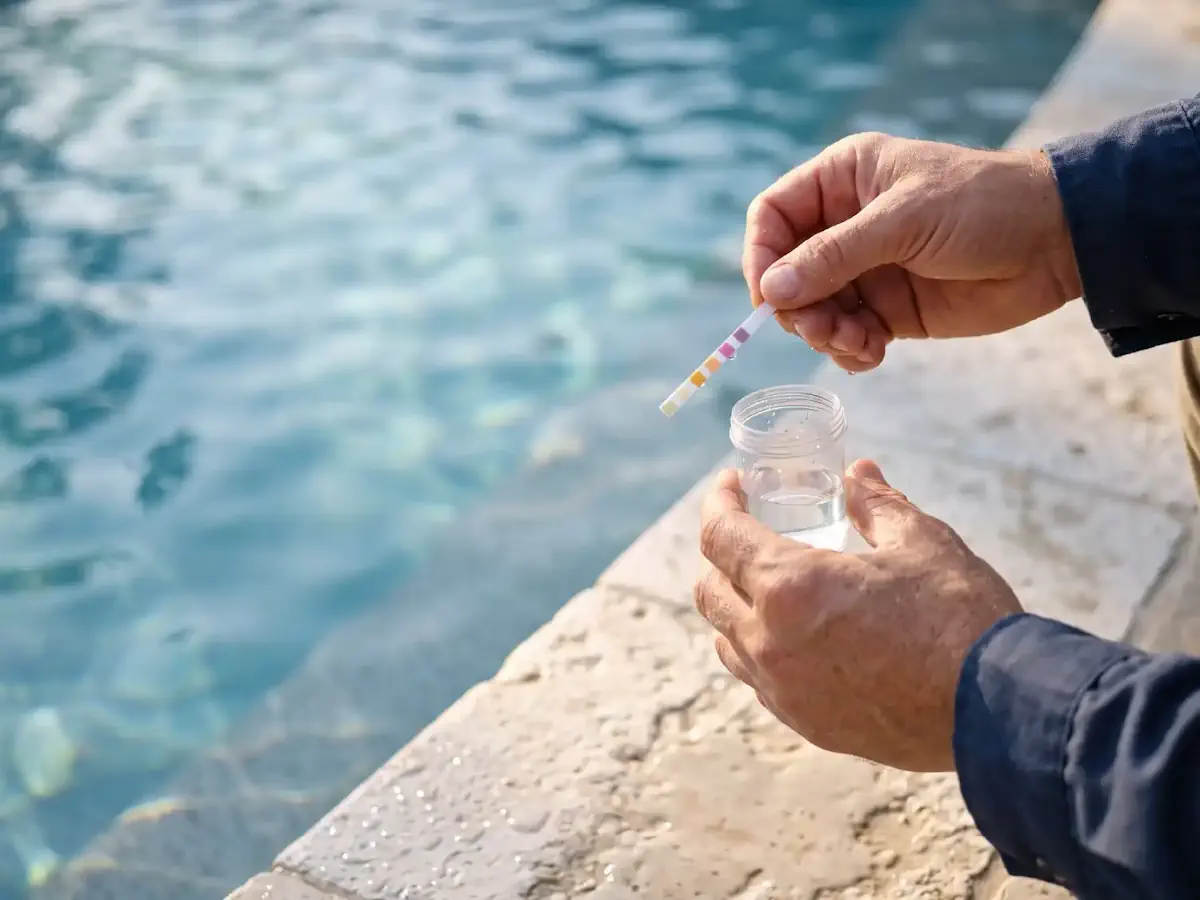
- Test your water. Check your sanitizer level and pH with test strips or a simple kit. A quick adjustment now prevents bigger issues later.
- Brush lightly. A soft brush over the walls and steps is usually all it takes. Skip anything with stiff or metal bristles, since it can scratch the gelcoat.
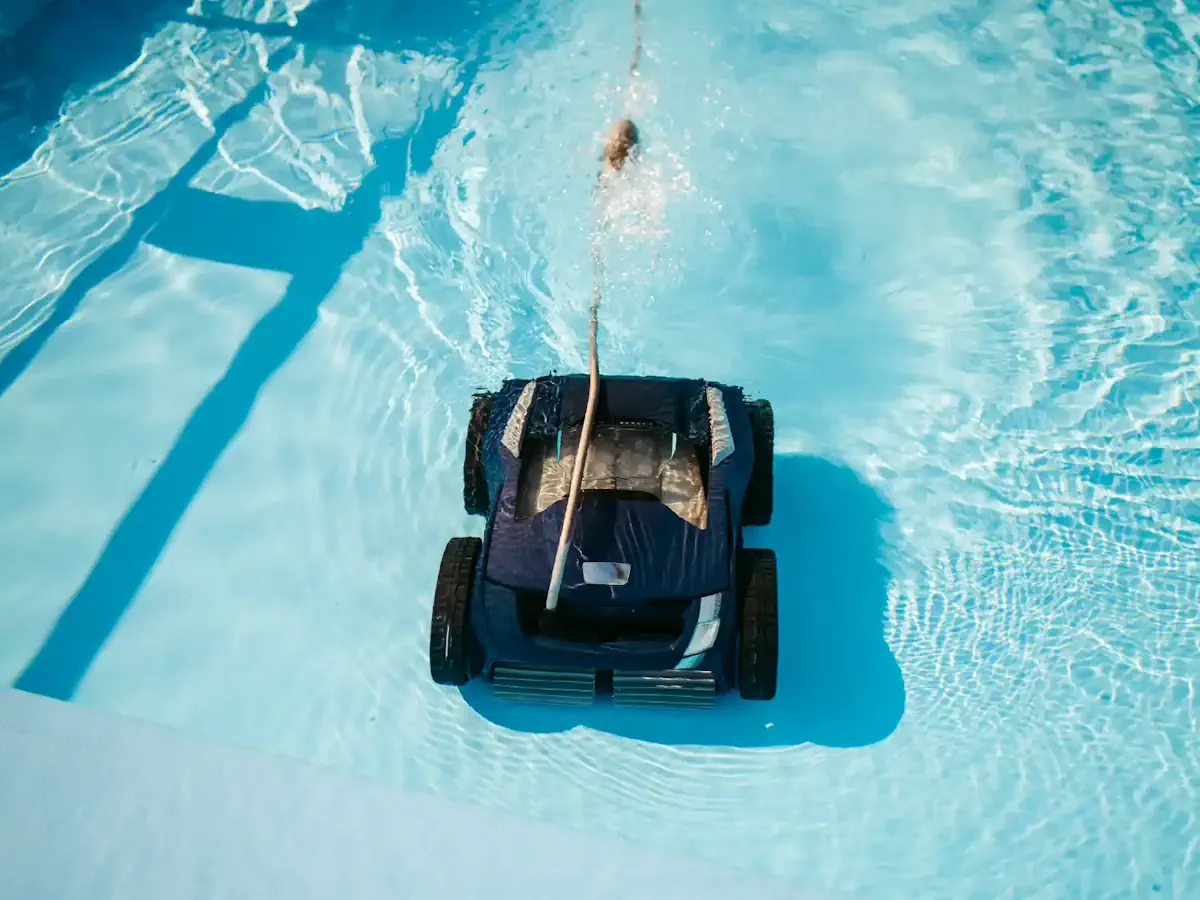
- Vacuum as needed. A quick pass with a manual vacuum or a robotic cleaner keeps the floor looking fresh. A robotic cleaner can handle this for you with almost no effort.
how often should you check fiberglass pool chemicals?
Plan to test your water at least once a week, and a little more often during hot stretches or after heavy use and big storms. The key levels to watch are sanitizer (chlorine or salt), pH and total alkalinity. Every so often, you’ll also want to check calcium hardness.
Keeping your water balanced does more than keep it clear. It also protects your pool’s finish over the long haul. If you’re ever unsure about the right ranges for your pool, your local dealer is a great resource.
does a fiberglass pool need acid washing or resurfacing?
No. This is one of the biggest differences between fiberglass and concrete. Concrete pools typically need acid washing every few years and full resurfacing down the road, which can get expensive. Fiberglass pools don’t need either one.
fiberglass vs. concrete vs. vinyl: how does maintenance compare?
Here’s a quick look at how the three main pool types stack up:
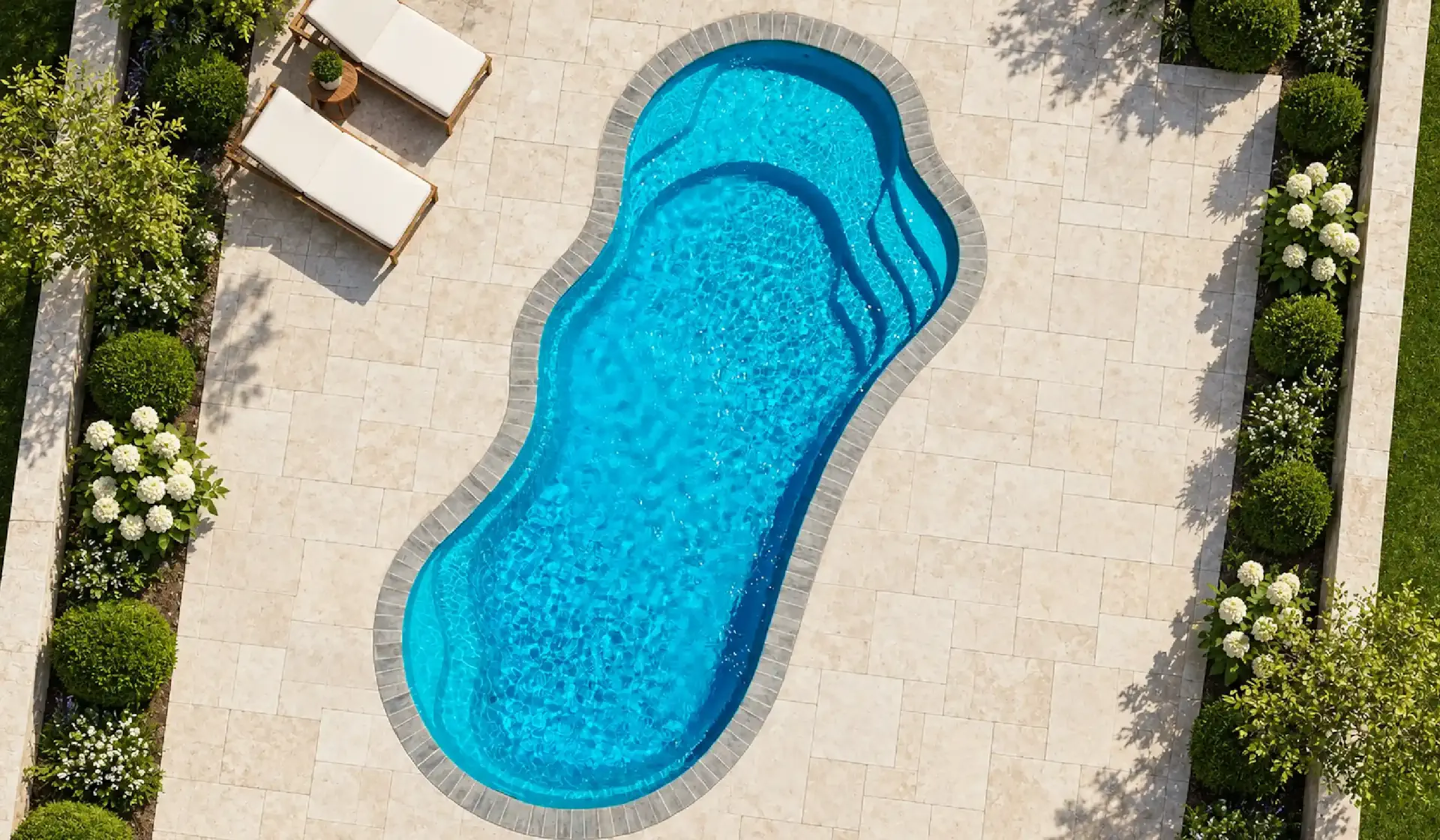
freeform pool shapes: made for relaxing and blending in
| Maintenance task | Fiberglass | Concrete | Vinyl liner |
|---|---|---|---|
| Surface type | Smooth and nonporous | Porous | Smooth but easily punctured |
| Algae resistance | High | Low | Moderate |
| Chemical use | Lower | Higher | Moderate |
| Acid washing | Not needed | Every few years | Not needed |
| Resurfacing or liner replacement | Not needed | Needed over time | Liner replaced periodically |
| Weekly brushing | Light | Heavy | Light and careful |
Over the life of your pool, those skipped resurfacing jobs and liner swaps add up to real savings in both time and money.
what seasonal care does a fiberglass pool need?
Depending on where you live, you may open and close your pool each year.
Opening in spring. Remove the cover, clean out any debris, reconnect your equipment, top off the water and get your chemistry balanced before the first swim.
Closing in fall. Clean the pool well, balance the water, lower the level if your climate calls for it, winterize the plumbing and put on a sturdy cover.
In warmer climates where pools run year-round, you’ll simply keep up your weekly pool maintenance routine and maybe give your equipment an extra look during peak season.
how can you make fiberglass pool maintenance even easier?
A few smart add-ons can cut your to-do list down even more:
- Robotic cleaner. Let it handle the floor and walls while you relax.
- Automatic pool cover. Keeps debris out and helps hold in heat.
- Saltwater system. Generates chlorine for you, so there’s less hands-on dosing.
- Variable speed pump. Runs efficiently and quietly to keep water moving.
- Smart pool controls. Manage your pump, lights and heater right from your phone.
so how much maintenance does a fiberglass pool really need?
Honestly? Not much. A few minutes of skimming, a quick water test and a light brush each week will keep your pool looking great. Add in seasonal opening and closing if you live where winters get cold, and that’s about it.
With an EvoPools fiberglass pool, you spend less time on upkeep and more time actually enjoying your backyard. Ready to see what that looks like for your family? Reach out to your local EvoPools dealer to explore models and get started.


